
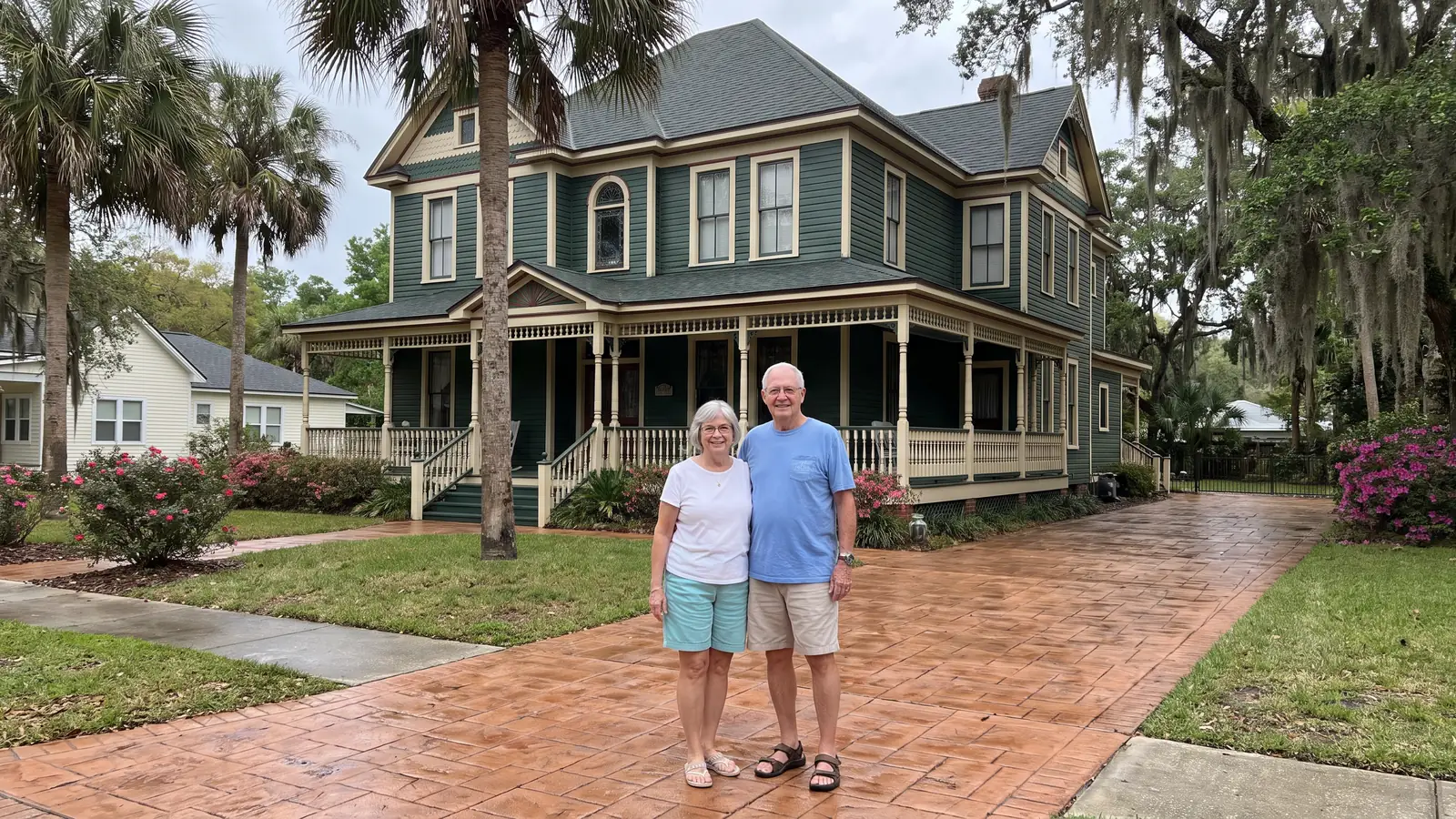
Paver sealing for Fleming Island homes
Paver Sealing in Fleming Island, FL
On Fleming Island, from Eagle Harbor to Pace Island, call (386) 854-4508 for a free paver sealing estimate.
- Brings out deeper paver color
- Fresh joint sand helps lock pavers in place
- Gives weeds less room to grow
- Makes the surface easier to keep clean
- Free estimate, no obligation
Request a Free Estimate
Free, no obligation.
Fast, careful paver sealing in Fleming Island
Paver sealing is available on Fleming Island, from Eagle Harbor to Pace Island and the Fleming Island Plantation streets. The estimate is free, and a local contractor then cleans, re-sands and seals driveways, walkways and pool decks on the island. Ask for yours with send a quick request, and you will hear back within 1 business day, usually much sooner.
Think of the drive you pull into every day. The joints have gone gray, the color has dulled, and a few weeds are up. A wash, new sand and a fresh coat put it back to one steady shade, and you can call (386) 854-4508 to start with a plain description of what you see.
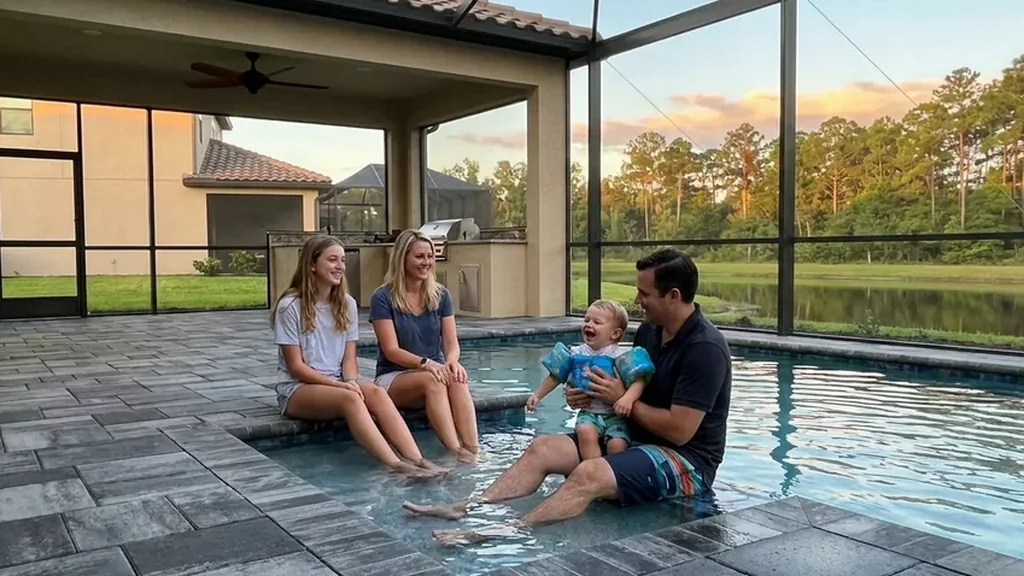
Why hire a local paver sealing contractor in Fleming Island?
Fleming Island is ringed by water and built on deep sand, and both shape how pavers wear. A local contractor plans for that, and you can send a quick request to hear how it fits your lot.
A free look first
The contractor checks your Fleming Island pavers at no charge. A price comes before any commitment, and you owe nothing for asking.
A range for comparison
Companies across Northeast Florida commonly publish $1.75 to $3.25 per square foot to clean, sand and seal. Compare every Fleming Island quote with it.
Finish choices explained
Natural, satin and wet look finishes all exist. Wet look shows scuffs sooner than matte, so a busy Fleming Island driveway may suit a quieter finish.
Done on your timeline
You choose the date, within the dry window the sealer needs. A Fleming Island estimate comes with no obligation.
Get Your Free Estimate in Fleming Island
Tell us about your pavers in Fleming Island.
Free, no obligation
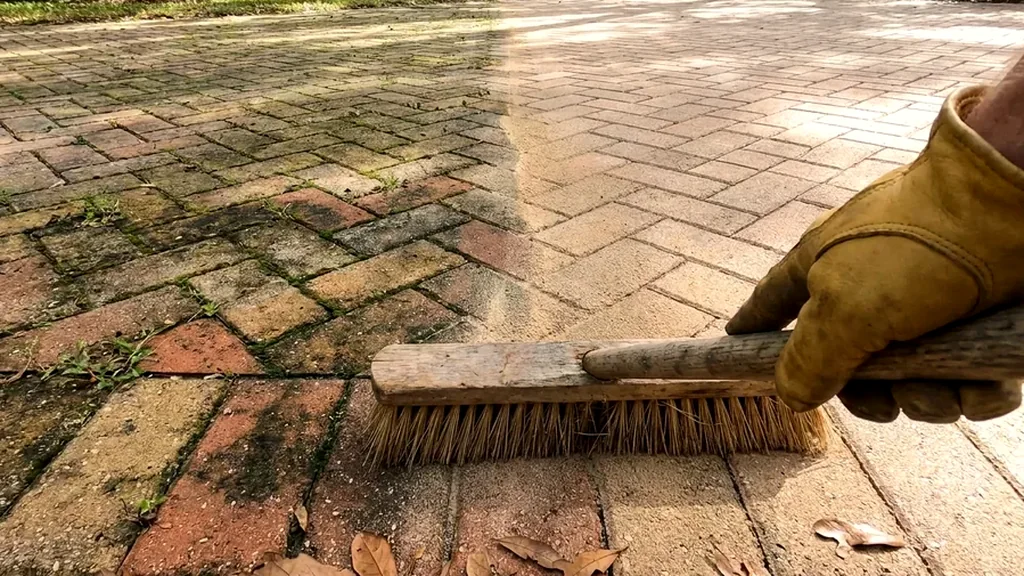
What paver problems show up most in Fleming Island?
Sand that drains away
The USDA says the Penney soil series, typed in Clay County, is deep sand that is excessively drained, with rapid permeability. Ground like that gives pavers little to hold onto. Heavy rain moves sand out of the joints, and weeds move in. Sealing after the joints are refilled keeps the sand in place. Weeds and ant hills along a joint line are the usual sign that sand has gone. A driveway that carries a few tons every time a car pulls in also loosens sand through turning tires, so the apron and the curve at the garage often go first. Ask the contractor to measure how far the sand sits below the paver edge, since that shows how much has been lost.
High water from the river and creeks
Fleming Island has the St. Johns River on the east, Doctors Lake on the north and Black Creek on the south. Pavers that went under water can hold a film of silt. Sealer must not go over that film. Pace Island's own history page says its eight ponds and roads were engineered so the community does not hold damaging water in heavy rain. Even so, a low corner of a drive can stay wet, so mention any spot where water sits after a storm.
Brackish lake air and constant damp
Doctors Lake is brackish, and water covers about 31.56 percent of the island's area. That means humid air and damp ground are part of daily life here. Algae and mildew gather where pavers stay wet. A shaded lanai or a north-facing walk often goes green first. Put plainly, a surface that never dries gives algae a head start. Sealing does not stop moisture, but it makes the next washing easier, and a clean, coated surface sheds water better than bare, porous pavers. That is why the contractor asks about irrigation timing as well, since sprinklers add to the damp.
Coats from the 1990s and 2000s
Pace Island homes were built from 1989 to 2002, and Eagle Harbor homes from 1993 to 2010. Pavers that came with them may have a coat from an earlier owner. Water-based sealer cannot be put over a solvent-based coat. Without a record, a test patch helps tell which is there. Eagle Harbor listings in one market report ran from 1993 to 2010, so some drives are already old enough for a second coat. If you are the second or third owner, ask neighbors or your closing papers about past sealing.
Acorns and leaf stains
Water oak acorns are prolific, UF/IFAS says, and they stain asphalt and concrete where they land. Laurel oak leaves typically hold on until early spring. Pavers beside mature oaks pick up spots from both. Any stain gets treated first, since a coat would seal it in. Live oaks also spread 60 to 120 feet, so one tree can shade a whole front walk. Fewer hours of sun mean slower drying, which is why shaded stretches are worth a separate look at the estimate.
Is paver sealing handled the same in Eagle Harbor and Pace Island?
The steps are the same, though the starting point differs. Pace Island dates to a 1984 plan, and its first resident arrived shortly before Christmas 1989. Eagle Harbor was developed by East-West Partners starting in 1993. Pavers in the older community have simply had more years of sun, so tell the contractor your street when you send a quick request.
Eagle Harbor is large, with about 2,650 homes expected at buildout, according to a 2004 report, and a golf course, a nature preserve and a waterfront park. Fleming Island Plantation was approved in 1998 on 2,129 acres, and builders there included Centex, D.R. Horton, Admiral Homes and Beazer Homes. Several builders worked there, so layouts differ, and you can call (386) 854-4508 to describe yours.
A market report says all sampled Eagle Harbor listings report an HOA, and the community has a CDD assessment. Florida Statute 720.3035 caps an association's look review at what its declaration or published guidelines state or reasonably imply. Read those documents before choosing a finish. Then send a quick request.
What does paver sealing cost in Fleming Island?
Expect published prices of $1.75 to $3.25 per square foot across Northeast Florida for a clean, sand and seal. Where a Fleming Island job lands depends on size, stains, joint sand and the old coat. One company says smaller projects cost more per foot because prep time does not shrink with the area. To price your pavers, send a quick request.
Failed sealer must be stripped before the new coat, and that adds cost. One Jacksonville company says oil-based coats must be stripped first, which applies to about 10 to 20 percent of its jobs. Repairs to sunken sections add time as well. Call (386) 854-4508 and the contractor can tell you what applies to your drive.
| Paved area | Typical example | Clean, sand and seal |
|---|---|---|
| 300 sq ft | Small patio or walkway | $525 to $975 |
| 600 sq ft | Two car driveway | $1,050 to $1,950 |
| 1,000 sq ft | Large driveway or pool deck | $1,750 to $3,250 |
| 1,500 sq ft | Driveway plus pool deck | $2,625 to $4,875 |
Math based on the $1.75 to $3.25 per square foot that Northeast Florida paver companies publish. Your contractor sets the actual price after seeing the surface. Repairs, leveling and stripping failed sealer are usually extra.
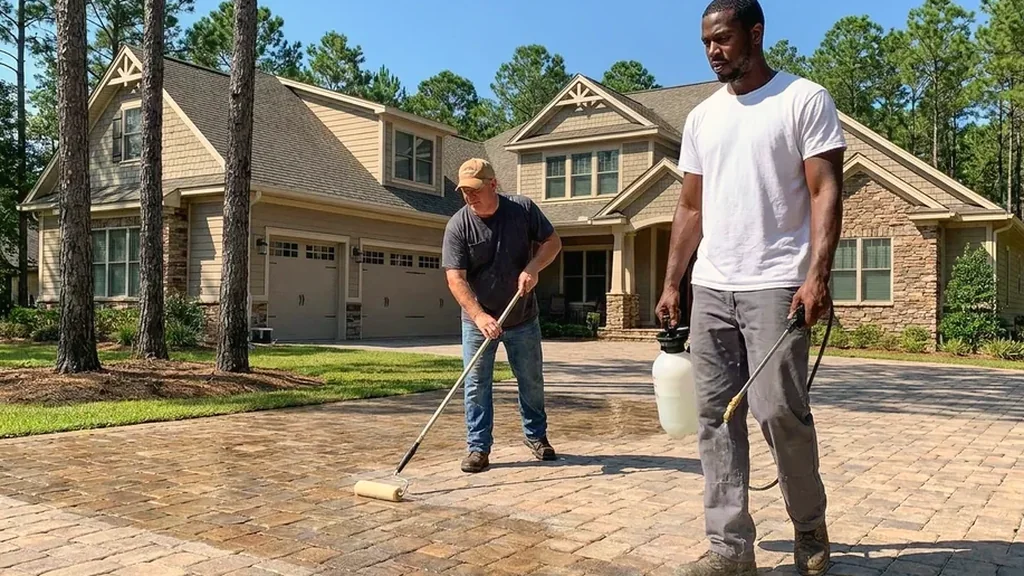
How does a paver sealing job work in Fleming Island?
Walk the lot and find the old coat
The contractor looks at how water leaves your Fleming Island drive and where shade holds moisture. Sunken or lifted sections are reset first, because sealing locks in whatever is there. The visit also identifies any old sealer. Mention whether the lot ever took on water. The visit usually covers the garage apron, the walk to the door and any back patio, so have those areas clear. Photos of the problem spots help the contractor give a more exact price.
Wash away algae and silt
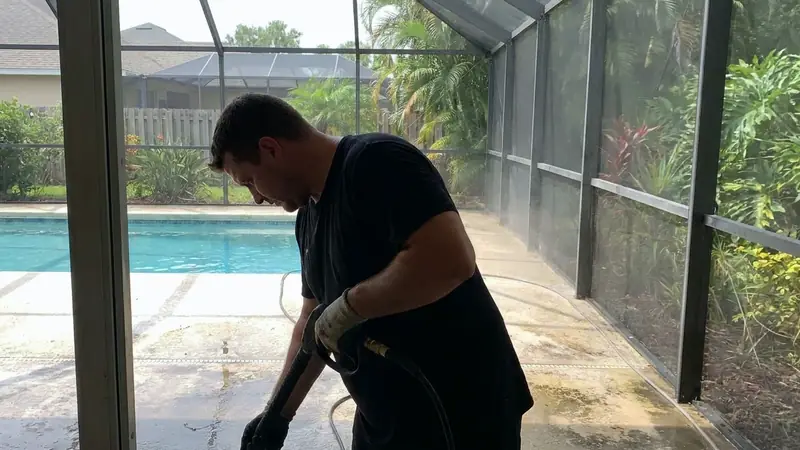
Cleaning clears algae, dirt and any film that high water left behind. Rust and oil are pre-treated, though some deep stains will not come out completely. Because high-pressure washing can loosen joints, the pressure is matched to your pavers. The aim is a clean surface the sealer can bond to. Plants and beds along the edge are protected before cleaning starts. Pool decks need rinse water kept out of the pool. Ask which pressure setting will be used.
Refill the joints
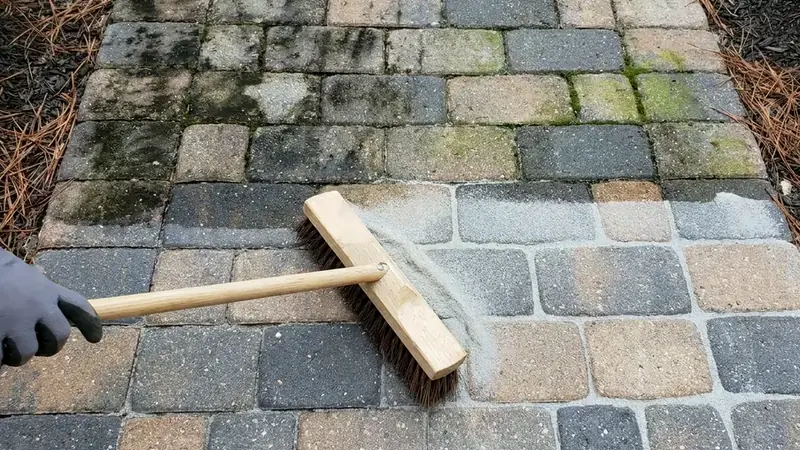
Joint sand leaves with the wash, so new sand goes in before the coat. On Fleming Island's sandy ground, a joint left open loses sand again with the next storm. New sand is worked in, and then the surface gets a sweep. Full joints also hold the pavers together. Different sand colors exist, and the contractor can match the sand to your pavers. Joints that are full also keep the pavers from shifting.
Let everything dry
Sealer needs a dry surface. A manufacturer bulletin wants the surface dry for 24 hours after cleaning or rain, with sprinklers off. Damp ground near the water can slow this down. If rain moves in, the job waits. Pool decks can take a different finish, and some get a penetrating sealer that keeps traction when wet. Ask what suits your deck.
Spray and back-roll the coat
The sealer goes on by spray and is then back-rolled, which a trade bulletin recommends for most products. Beading water later shows the coat is working, one Jacksonville company says. Water that soaks in and turns the paver dark signals a spent coat. Recoating on Fleming Island usually falls two to five years apart, the span companies commonly quote. The surface stays closed to cars for about a day, and foot traffic is usually fine within a few hours. Keep sprinklers off during that time.
Complete paver services in Fleming Island
Every Fleming Island job follows one order: wash, re-sand, dry, then seal. The wash lifts algae and grime so nothing is locked under the coat. Fresh sand fills the joints next. To ask how long each step takes on your lot, call (386) 854-4508.
Driveways carry daily tires. Pool decks take chlorine, bare feet and splash. Walkways near oaks collect leaf litter and stains. Tell the contractor which surfaces you want sealed when you send a quick request, because each one wears in its own way.
Sealer is water-based or solvent-based, with finishes that run from natural to satin to wet look. Old coats matter here, since a water-based product cannot go over a solvent-based coat. Wet look deepens color but shows scuffs sooner. Call (386) 854-4508 to talk through which finish suits your house.
Storm season and sandy ground both affect timing. Jacksonville gets most of its rain from May to September, often in short, hard downpours. A damp lanai may need extra days to dry, and pavers near the water can stay wet longer. To plan around the weather, send a quick request.
Questions to ask before you hire
- The pavers back onto a retention pond, so how do you keep rinse water out of it?
- Will the wash take pine straw and the dark mold off the joints, or only the surface?
- If a storm pops up in the afternoon, how do you protect a sealer coat that is still wet?
- Is the sealer you use rated for the heat and humidity we get along the river?
- My home runs on well water, so can the rust spots from my sprinklers be removed before sealing?
- Is the estimate written down with the sealer, the coats and the square footage listed?
- Can you tell me how many square feet you measured, and how the number was reached?
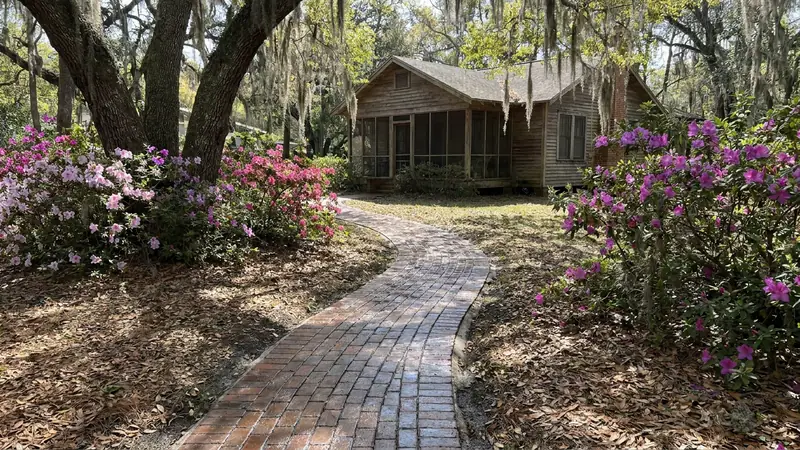
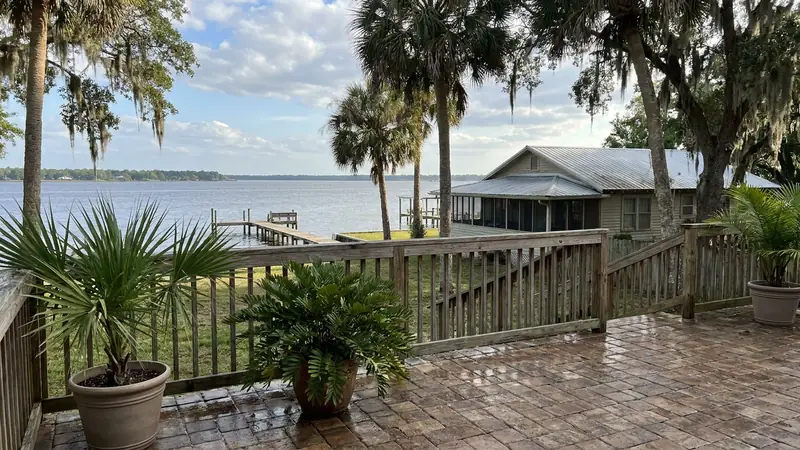
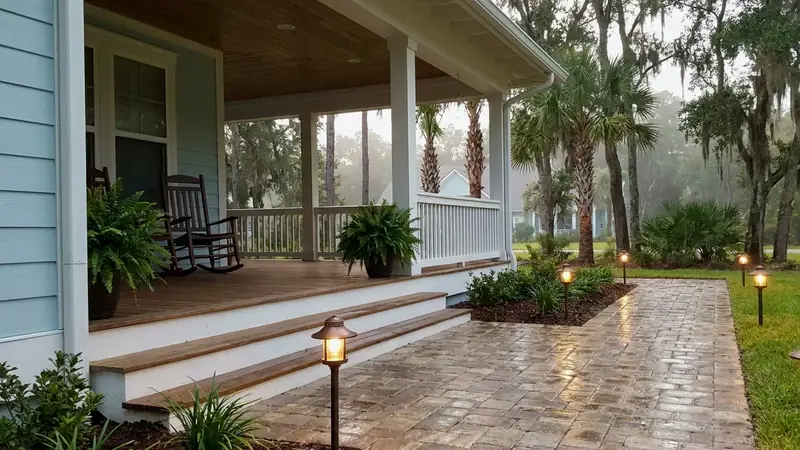
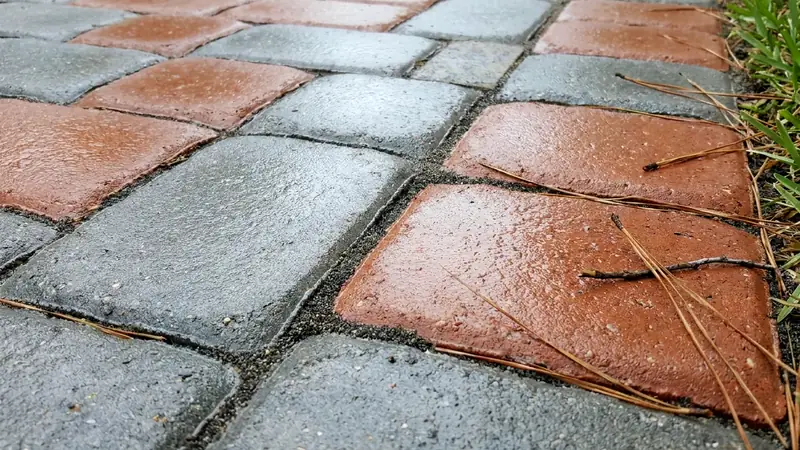
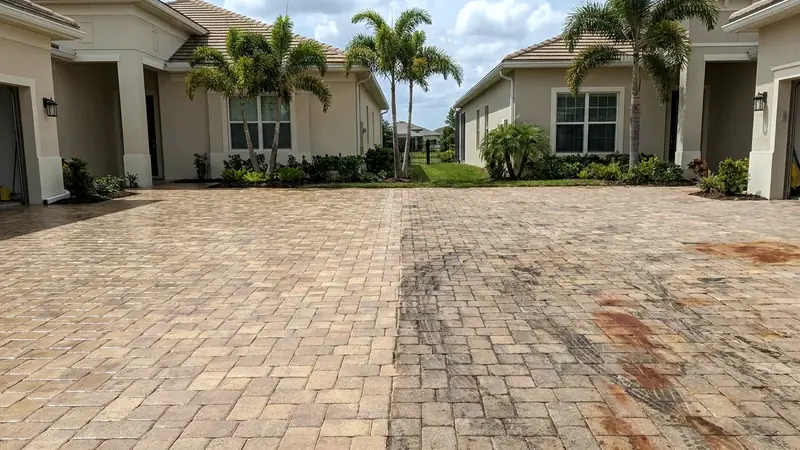
What do sealed pavers look like around Fleming Island?
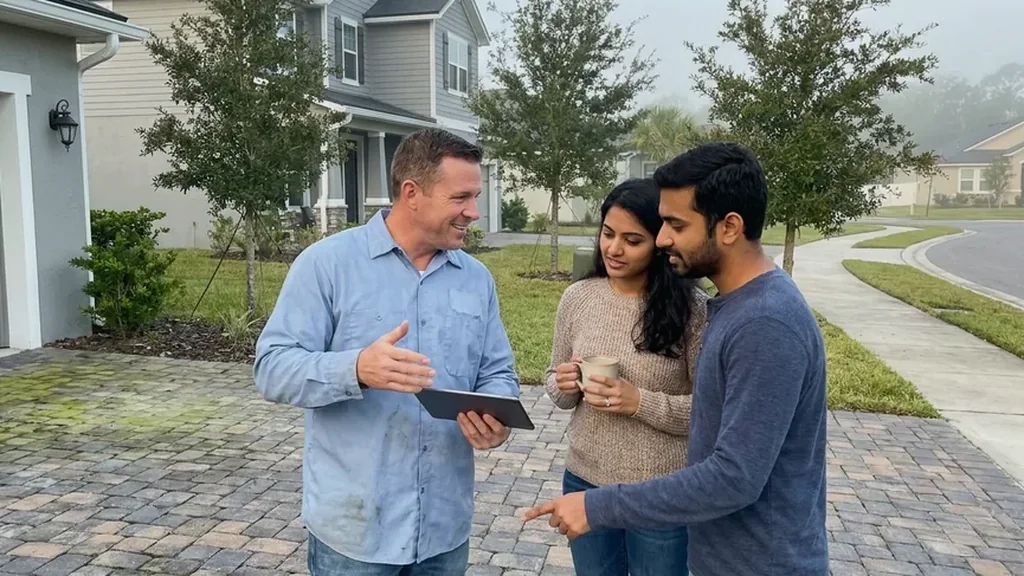
Why local matters in Fleming Island
A contractor who works in Clay County knows Fleming Island is water on every side. The St. Johns River, Doctors Lake, Black Creek and Swimming Pen Creek all touch it. That affects how long pavers stay wet and how a job is timed. To talk about your lot, call (386) 854-4508.
The island's housing is mostly from the 1990s on. The Navy built four asphalt runways here in 1942, and they were demolished in the late 1990s to make way for homes. A local contractor expects pavers here to be fairly young, which means fewer surprises under the surface. If you want an opinion on yours, send a quick request.
Planned communities add paperwork. Many neighborhoods have an HOA, and Eagle Harbor has a CDD assessment, so rules and fees are part of life. A local contractor can describe the product and finish in plain terms for an association. Call (386) 854-4508 to ask.
What is Fleming Island's history, and does it matter for my pavers?
It matters mostly because the housing is new. George Fleming founded the Hibernia plantation in 1790, but the 1942 Navy airfield is what shaped today's streets, since its runways came out in the late 1990s for housing. St. Margaret's Episcopal Church, built from 1875 to 1878, is an older landmark. Most of your neighbors have pavers from the last three decades, so send a quick request to talk about yours.
Fleming Island has about 7 miles of 8-foot sidewalk, Black Creek Park at the south end and Moccasin Slough at the north end. Fleming Island High School opened in 2003, and the 2020 census counted 29,142 residents. Life here is outdoors, and pavers take that traffic. Call (386) 854-4508 for a free look.
The Crossings at Fleming Island is a 2,600-acre project that includes the 2,500-home Eagle Harbor north of County Road 220, and development along that road began in 1992. Fleming Island Plantation was approved in 1998 on 2,129 acres with room for 3,790 homes, and its first developer donated school sites, 150 acres for parks and land for a county library and post office. Pavers in neighboring homes can be close in age, so call (386) 854-4508 for a free look.
Frequently Asked Questions
How long do paver sealers last on Fleming Island?
Fleming Island owners can plan on two to five years between coats, the span companies commonly quote. Full-sun driveways need resealing about every 18 to 24 months, says a Jacksonville company, and shaded light-traffic walkways about every 24 to 36. Pool decks with chlorine or salt systems also fall on the shorter side.
What is the average cost to seal pavers on Fleming Island?
Published prices for this work in Northeast Florida run $1.75 to $3.25 per square foot, clean, sand and seal. A failed old coat means strip and reseal work, which raises the total. Have the total area written on the quote.
Is there a downside to sealing pavers on Fleming Island?
The main downsides are upkeep and timing. Sealer wears and needs recoating, a wet look shows scuffs sooner than matte, and the surface must be dry. Damp ground near the water can push a date back.
Is it good to seal pavers in Florida, and does Fleming Island change the answer?
Yes. A Jacksonville company reports noticeable fading on unsealed concrete pavers in 3 to 5 years, plus sand flushed out of unsealed joints by summer downpours. Fleming Island's sandy, fast-draining ground makes that sand loss easy to see.
Why is paver sealing so expensive?
Most of the cost is prep. Prep runs about 2 to 3 hours for every hour of sealing, one Jacksonville company says. Washing, stain treatment, re-sanding and drying all come before the coat.
Can I seal pavers after floodwater reaches my Fleming Island driveway?
Yes, once they are clean and dry. Silt has to be washed off, and lost joint sand replaced, before sealing.
Do I need HOA approval to seal pavers in Eagle Harbor or Pace Island?
Check your documents. Under Florida Statute 720.3035, an association may review looks only within what those documents state or reasonably imply. If your association asks, the contractor can supply the finish name.
Can new sealer go over my old coat?
Not always, since the old product decides what can go on top. Someone has to identify the old product before anything goes on. Any receipt or product name from earlier work can settle it.
How long does a paver sealing job take on Fleming Island?
A Jacksonville company says most driveways are cleaned, sanded and sealed in a single day, with cure time after. You can usually walk on the sealed surface within a few hours, and cars should wait about a day. A larger lot or a rainy week can add time.
What does a Fleming Island contractor do about weeds in the joints?
Weeds and old sand come out during the wash, and fresh sand goes in before sealing. Landscape Ontario's guide says stabilizing joint sand with a sealer is the most effective way to keep weeds from returning. Full joints also give weeds less to grow in.
Do pool decks on Fleming Island need a different sealer?
Often, yes. A Jacksonville pressure washing company says pool decks often get a penetrating sealer that keeps traction when wet. Another says decks with chlorine or salt systems may need recoating about every 18 to 24 months, so ask the contractor what suits yours.
Ready for a Free Estimate in Fleming Island?
Call (386) 854-4508 and tell us about your pavers.
Free, no obligation