
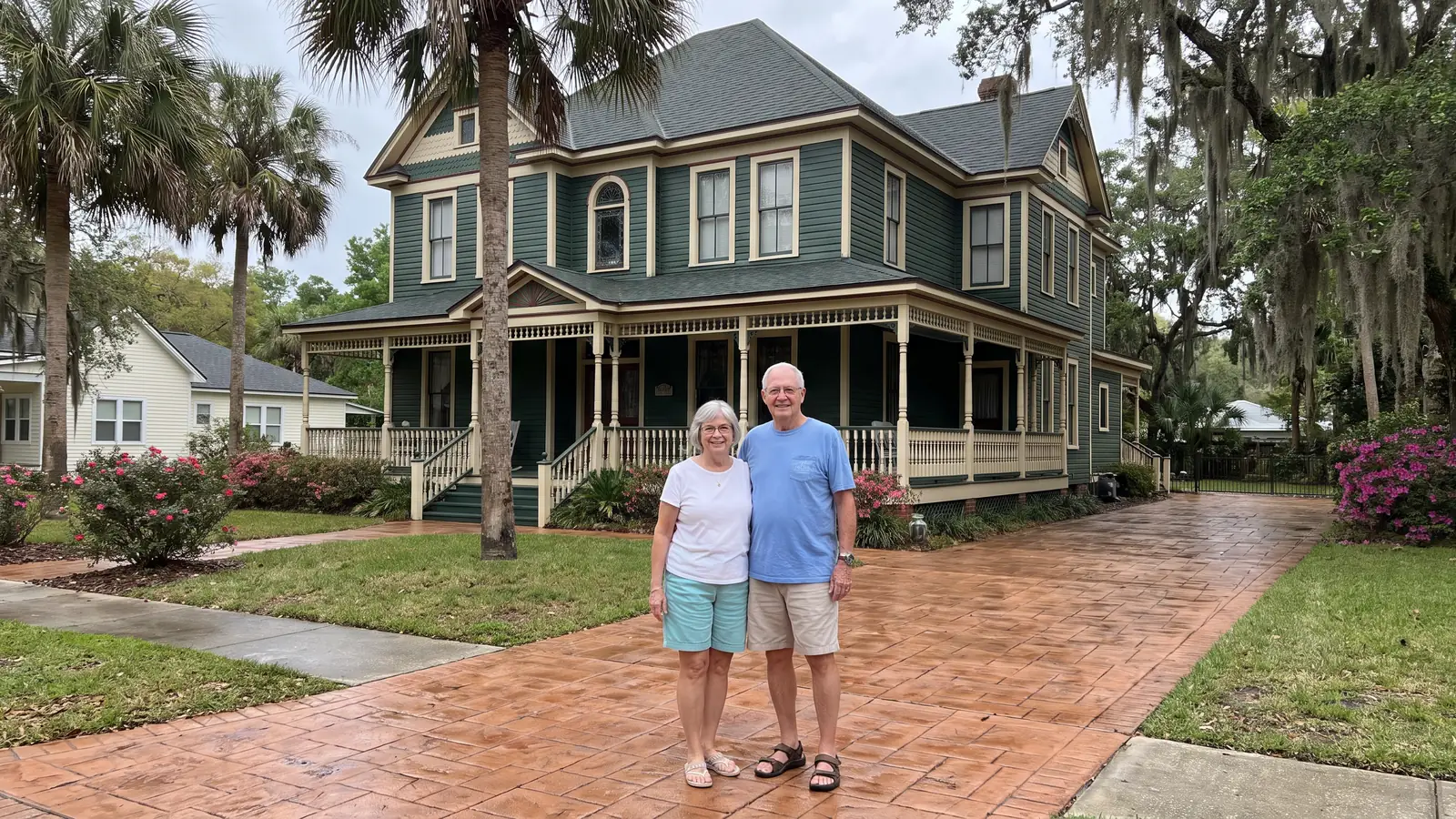
Rust, leaf stains and oil spots lifted, not just rinsed
Paver Stain Removal in Palatka, FL
Call (386) 854-4508 for a free estimate to treat the stains on your Palatka pavers.
- Brings out deeper paver color
- Fresh joint sand helps lock pavers in place
- Gives weeds less room to grow
- Makes the surface easier to keep clean
- Free estimate, no obligation
Request a Free Estimate
Free, no obligation.
Can someone remove the stains from my pavers in Palatka, and how quickly do I get a reply?
Yes, a local contractor can treat paver stains at homes across Palatka, FL, and a reply comes within 1 business day, usually long before that. The estimate is free, with no obligation to book. To describe your stains, call (386) 854-4508.
Each stain has its own cause, and each needs its own treatment. Orange streaks, brown leaf marks, oil spots and white haze all look like dirt from a distance, yet a plain wash fixes few of them. Treating the right one the right way keeps the pavers and the sealer safe. To send a photo or a description, send a quick request.
Which Palatka area towns can get paver stain removal?
Stain work starts in Palatka and reaches across Putnam County and along the river to the coast. Every area below has its own page. If your street is not named, call (386) 854-4508.
What is causing the stains on my Palatka pavers?
Four sources explain most of what Palatka homeowners see: iron in irrigation water, tannin from oak leaves, vehicle oil, and moisture-driven growth or salts. A Northeast Florida washing company also lists fertilizer burn and tire marks among the stains it sees. To match your marks to a cause, call (386) 854-4508.
Orange rust streaks
UF/IFAS says most Florida well water is high in iron and leaves rust deposits wherever it lands. Sprinklers, furniture legs and fertilizer are common sources.
Brown leaf marks
Live oak leaves release tannin when wet. Marks show under canopies and along beds, and they return each year.
Oil and grease
Car drips and grill splatter soak into the surface. Fresh oil is easier than old oil.
Green, black or white
Algae and mildew live in damp shade, and a white haze is usually efflorescence from the cement.
Why does a harder blast not remove rust or tannin from pavers?
Stains are chemistry, not dirt. A Northeast Florida washing company says irrigation rust needs a rust treatment and not more pressure. Western Interlock suggests keeping pressure at or below about 2000 PSI on new pavers, because higher pressure can loosen the surface. Blasting also pulls sand from the joints. To ask how a contractor handles it, call (386) 854-4508.
Cambridge Pavingstones makes a second point: a rust remover will damage a sealer. So on sealed pavers the treatment, the area and the finish have to be planned together. A test on one or two pavers in a hidden spot comes first. For a test visit, send a quick request.
What is the process for rust stains from sprinklers in Palatka?
First comes the source. Cambridge Pavingstones says to identify where the rust comes from, such as sprinklers, furniture or fertilizer, because treating the stain without fixing the source brings it back. UF/IFAS explains the Florida side: most well water is high in iron, and iron-rich irrigation leaves rust deposits on whatever it touches. To have the spray pattern checked, call (386) 854-4508.
After that, a rust treatment made for pavers lifts the stain, sometimes in more than one pass. Sealed areas get extra care, since the product can harm the coat. Resealing may be needed afterward. To set that plan, send a quick request.
Can brown leaf stains from live oaks be removed, and will they return?
Often they can be lifted, though they come back if wet leaves keep landing on the same spot. A Northeast Florida washing company says sealer helps keep stains from setting in the next season. Cambridge Pavingstones is blunt that a decision about the tree itself may belong in the plan. For a plan under your oaks, call (386) 854-4508.
Unilock's guide to natural stone notes that organic stains such as leaves respond to a cleaner that also kills the organisms that cause them to return. Contractors use products made for that job and test first. Oak pollen from March to May adds a yellow film that a regular rinse handles. Mention the season when you send a quick request.
What about oil, grease and tire marks on a driveway paver?
Fresh oil is simplest. Unilock says to dab and not rub a vehicle oil stain, and to act quickly. Oil that has soaked in can be drawn out with an absorbent material left for about six hours, and Cambridge Pavingstones gives 6 to 8 hours for the product it sells. A Northeast Florida washing company lists oil and tire marks among the driveway stains that plain water will not lift. To book a treatment, call (386) 854-4508.
Old stains may take repeated passes, and some leave a faint shadow. A contractor should say so up front. Tell them how long the stain has sat when you send a quick request.
Are the white patches on my pavers a stain or something else?
Often they are efflorescence, a white or sometimes blue haze from salts in the cement and excess moisture. Western Interlock says rain fades it over time, and Unilock says to wait until it is completely gone before sealing, typically 2 to 3 months and up to a year. A contractor can tell it apart from old sealer. To confirm what you have, call (386) 854-4508.
What does paver stain removal cost in Palatka?
No page read for this site publishes a stain-only price. The one published piece is about $1.75 to $3.25 per square foot to clean, sand and seal, from a Northeast Florida washing company, which also says strip and reseal sits higher when an old coat has failed. A few spots on a sealed walk and stains across a whole driveway are very different jobs, so the table shows both. For a number on yours, call (386) 854-4508.
If a quote lists stain treatment as its own line, good. It means you can see what the stain work costs apart from sealing. To request an itemized quote, send a quick request.
| Situation | What it involves | Published figure to plan with |
|---|---|---|
| A few spots | Rust or oil on a sealed walk, spot treatment only | No rate published; quoted after a look |
| Stains across a 600 sq ft driveway | Full clean, stain treatment, new sand and a coat | $1,050 to $1,950 |
| Stains across a 1,000 sq ft pool deck | Full clean, stain treatment, new sand and a coat | $1,750 to $3,250 |
| Failed old sealer on top of the stains | Strip the coat, treat the stains, re-sand and reseal | Higher than the range; priced after a site look |
Square foot figures are the $1.75 to $3.25 a Northeast Florida washing company published for pavers. Stain-only work is not published by any page read for this site, so spot jobs are priced by the contractor.
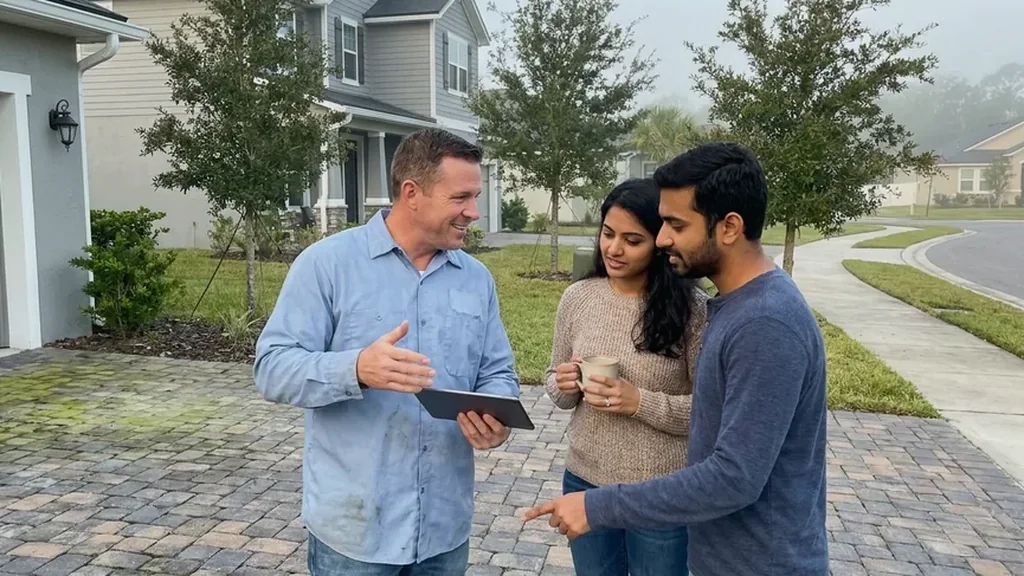
Why choose a local contractor for paver stains in Palatka?
A contractor who works in Putnam County already knows the usual suspects: iron in well water, live oak tannin, damp shade and storms that empty joints. Palatka averages about 107 rain days a year, so stains and growth get plenty of help. The price still comes in writing. To begin, call (386) 854-4508.
Ask what product will go on each stain, whether it is safe for a sealed surface, and what happens if a spot does not lift. The contractor standards page lists more questions worth asking. For a first number, send a quick request.
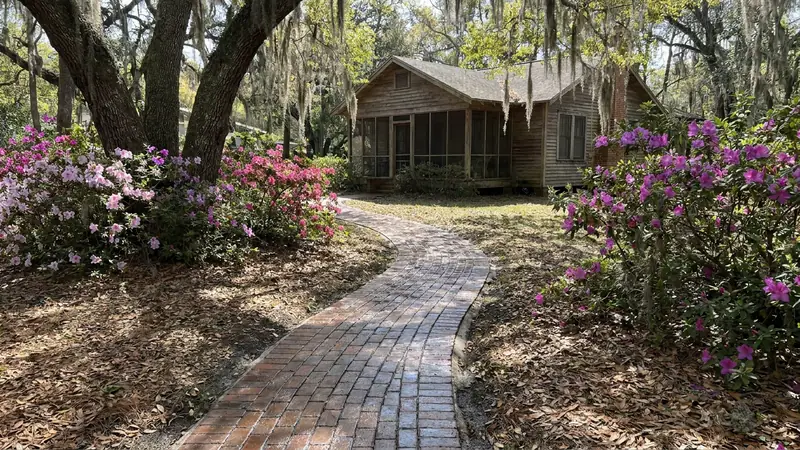
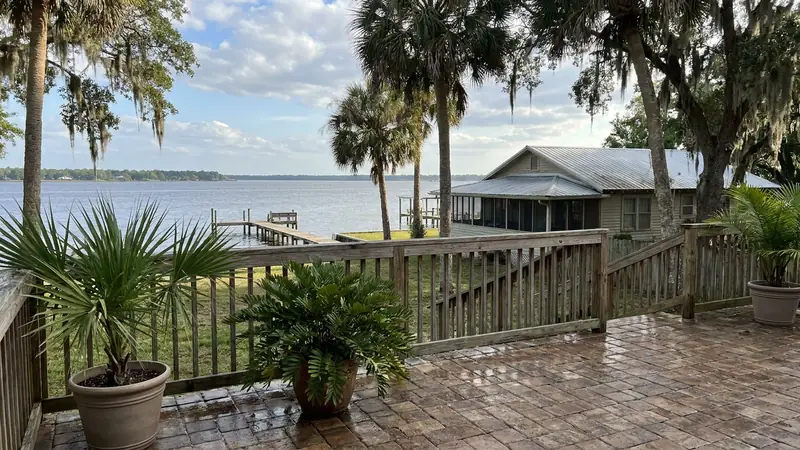
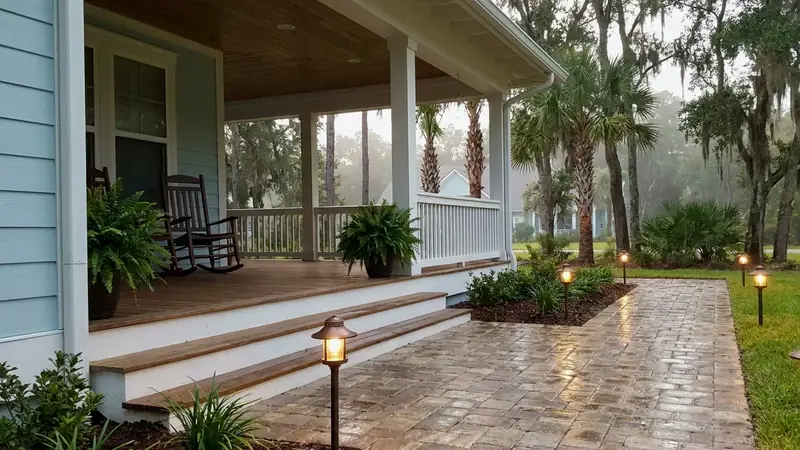
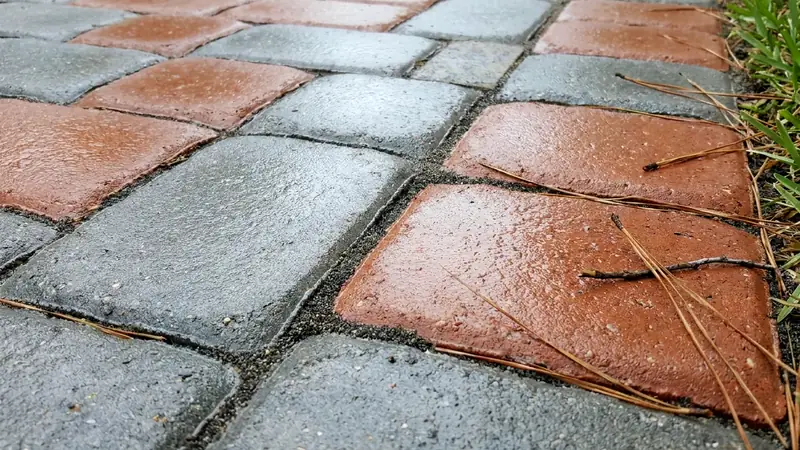
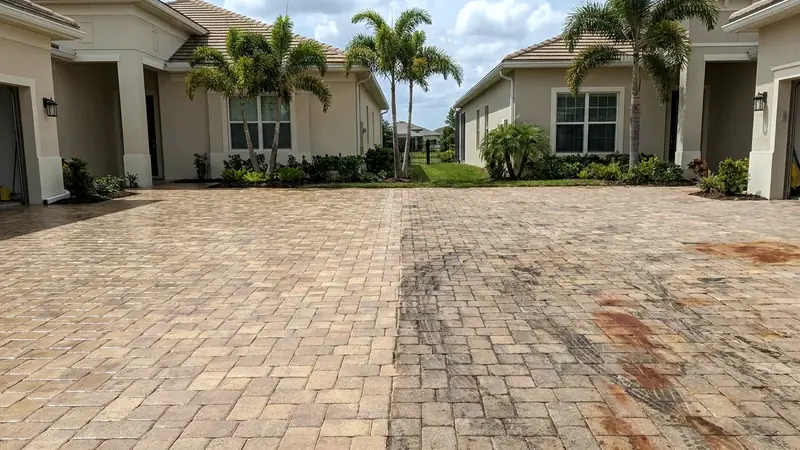
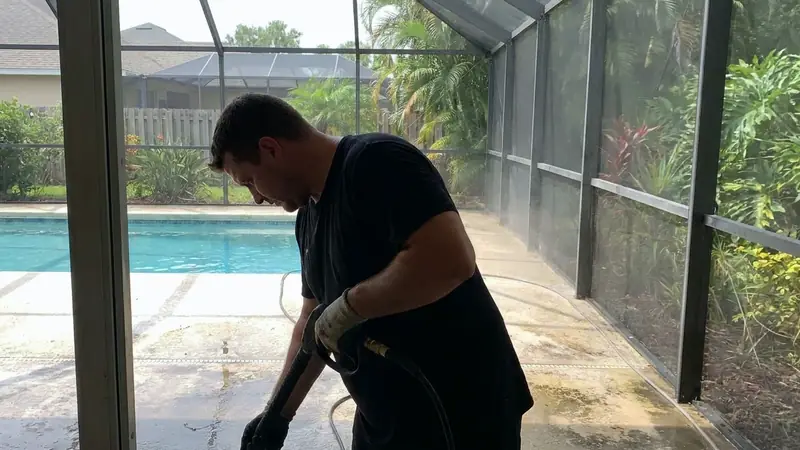
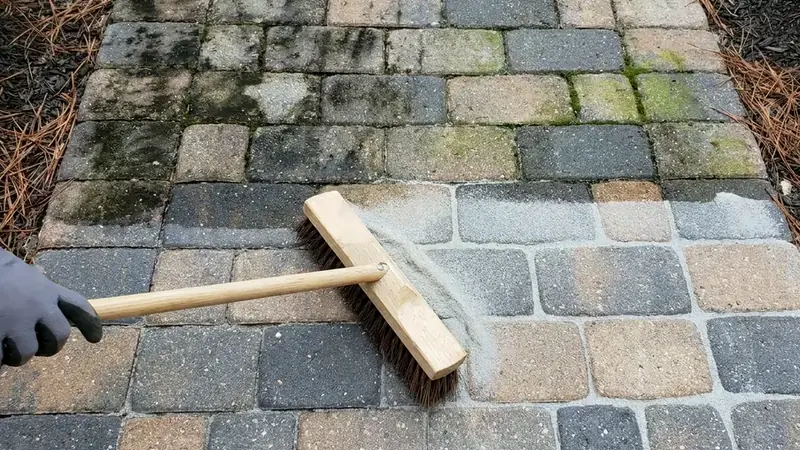
What do cleaned, stain-free pavers look like around Palatka?
Frequently Asked Questions
Is there a pressure washing business in Florida?
Yes, many, and the work ranges from house washing to paver care. For stained pavers the difference is skill with stain treatments, since a Northeast Florida washing company says irrigation rust needs a rust treatment and not more pressure. Ask a contractor how they treat the stain you have and how they test first.
Which cleaner is best for pavers?
It depends on the stain, which is why no single product works. Cambridge Pavingstones lists different treatments for oil, rust, leaf tannin and efflorescence, and warns that a rust remover will damage a sealer. Unilock adds that limestone and travertine are acid sensitive. A contractor should name the product for each stain and test it on a hidden spot.
Can I clean sand and seal my pavers?
Yes, those are the usual three steps in that order. A Northeast Florida washing company says sealing over dirt, wet pavers or empty joints is how jobs fail. Stain treatment sits inside the cleaning step, and sealing comes last, once the stains are gone and the surface is dry.
What is the average cost to seal pavers in Florida?
A Northeast Florida washing company publishes about $1.75 to $3.25 per square foot to clean, sand and seal. Stain work is not listed on its own, and the company says strip and reseal sits higher when an old coat has failed. A written estimate should separate stain treatment from sealing.
Why do my Palatka pavers have orange streaks near the sprinklers?
Most likely iron. UF/IFAS says most Florida well water is high in iron and leaves rust deposits on anything it touches, and Cambridge Pavingstones names sprinklers, patio furniture and fertilizer as common sources. Finding the source matters, since the streaks come back if the water keeps landing there.
Will live oak leaves stain my pavers every year?
They can. A Northeast Florida washing company links brown tannin stains to live oak canopies and says a sealer helps keep stains from setting in. Cambridge Pavingstones says leaf stains return each year, so the decision about the tree itself is part of the plan.
Can an oil stain from my car come out of pavers?
Often, with quick action and the right product. Unilock says to dab and not rub a fresh vehicle oil stain, and that oil which has soaked in can be drawn out with an absorbent material left for about six hours. Cambridge Pavingstones gives 6 to 8 hours for its oil remover. Older oil may need more than one treatment.
Why do white patches show up on my pavers?
That is usually efflorescence, a white haze from salts and moisture in the cement. Western Interlock says rain fades it over time, and Unilock says to wait until it is gone before sealing, typically 2 to 3 months and up to a year. A contractor can confirm it is not sealer residue.
Will sealing stop new stains from forming?
It helps but does not make pavers stain-proof. A sealer coat gives rust, tannin and oil less to grab, so a quick rinse reaches the surface. Cambridge Pavingstones also says no stain method is guaranteed, which is why a test patch comes first and why the source of the stain gets fixed.
Ready to lift the stains off your Palatka pavers?
Send the form or ring the number, and a contractor writes back inside 1 business day, often well before.
Free, no obligation